Turning a water resource into a structured, workable and credible project
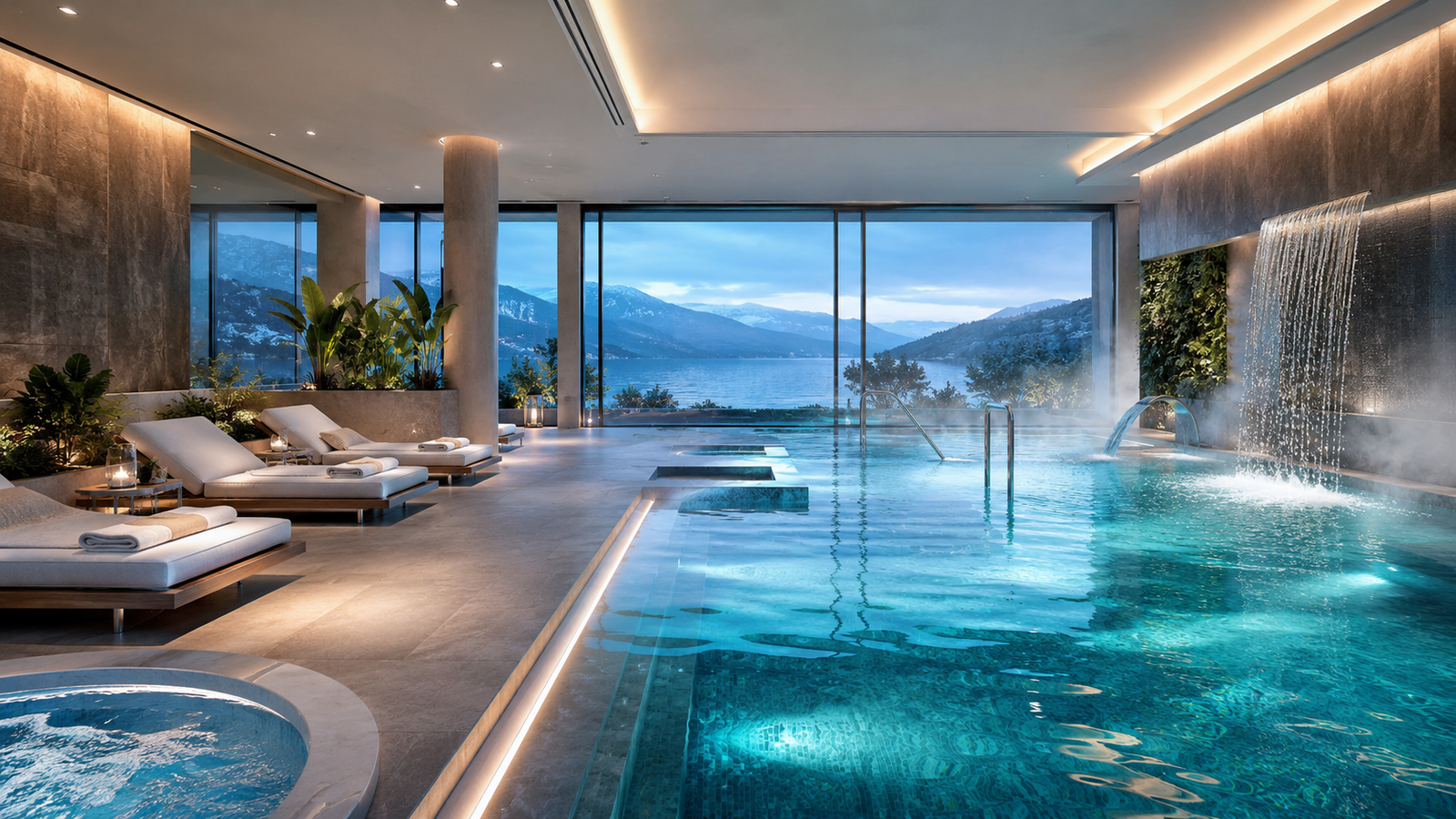
AQUATHEA supports the study of projects to produce, treat, reuse, package or make the most of water locally.
Depending on your site, your uses, the available resources and the envisaged operating model, several technical and economic solutions can be studied.
Discover the AQUATHEA solutions
Water is often a cost, an operating constraint or a logistical dependency.
Yet, depending on the context, a water project can help reduce certain expenses, secure an activity, reuse an available resource or create a new local activity.
The first step is to understand precisely the need, the uses, the available resource and the site’s constraints.
Which resources can be put to use?
Water is not a single resource. Depending on the territory, the activities and the available infrastructure, it can take different forms: humidity in the air, water that has already been used, saline or brackish water, a local resource to be treated, or water intended to be formulated, packaged and distributed.
In many projects, the first question is therefore not just where to find water, but how to make better use of what is already available. A resource that is currently little used, costly to transport, discharged after use or insufficiently exploited can sometimes become the starting point of a more coherent local solution.
AQUATHEA studies each situation on the basis of the site’s realities: nature of the resource, water quality, required volumes, intended uses, available energy, operating constraints and regulatory requirements. This analysis identifies the solutions that can be considered to produce, treat, reuse, desalinate, formulate or package water.
Making the most of water can serve several objectives. It can help reduce certain expenses, limit transport, secure an activity, create a local service, support on-site production or prepare a distribution project. It is never based on a standard solution, however: each project must be built according to its own technical, economic and territorial conditions.
With AQUASENSE, AQUARECOVERI, CALIPSEA, AQUALCHEMY and the AQUATHEA HUBS, several resources can be studied in order to turn a water need into a structured, credible project suited to its environment.

Water should no longer just be consumed. It must be managed.
A water project can transform much more than a supply.
It can reduce a dependency, secure an activity, limit certain transport, make better use of a local resource and create new operating capacity in the territory.
Producing, treating, reusing or packaging water as close as possible to the need changes the logic: no longer suffering scarcity, logistics costs or the limits of the network, but building an answer suited to the site.
The impact can then be measured at several levels.
An operational impact, by improving the continuity and control of supply.
An economic impact, by studying avoided costs, possible uses and the value models suited to the project.
A territorial impact, by promoting local production, technical skills and an organisation closer to users.
An environmental impact, when the project reduces certain transport, losses, discharges or resource consumption, depending on the configuration chosen.
A strategic impact, finally, because better control of water also strengthens the resilience of a hotel, a factory, a local authority or a territory.
AQUATHEA does not offer a universal promise.
AQUATHEA builds projects from a reality: a resource, a need, a site and a model to make credible.
Creating impact is not just about producing water. It is about giving a project the means to last, to function and to create value locally.
What does making the most of water mean?
What does making the most of water mean?
Making the most of water means using an available resource better, rather than treating it only as an expense, a discharge or a constraint.
Depending on the project, this can take several forms: producing water locally, treating and reusing certain waters, desalinating a saline resource, reducing losses, limiting transport, packaging water or developing a service around its production and distribution.
The aim is to turn a water need into a structured project suited to the site, the uses and local constraints. This approach is based on a technical, economic and regulatory study to identify the solutions that are genuinely feasible.
Making the most of water does not automatically guarantee savings or profitability. Each project must be analysed on the basis of real data and prudent assumptions.
Can a solution be implemented without buying the equipment immediately?
Can a solution be implemented without buying the equipment immediately?
Depending on the nature of the project, direct purchase is not always the only option. Several models can be studied, such as rental, industrial leasing, third-party financing, an operating partnership or the creation of a structure dedicated to the project.
Feasibility depends in particular on the country, the type of equipment, the project amount, the profile of the project owner, the business model and the partners that can be mobilised.
AQUATHEA can help structure the technical and operational aspects of the project, but does not guarantee that financing will be obtained. Each solution must be studied and validated on a case-by-case basis.
Does AQUATHEA finance projects directly?
Does AQUATHEA finance projects directly?
AQUATHEA works mainly on the study, design and technical structuring of projects related to the production, treatment, reuse or recovery of water.
Depending on the case, several financing options can be studied with specialised partners: industrial leasing, rental, third-party financing, operating partnership, private investor or a structure dedicated to the project.
AQUATHEA does not, however, guarantee that financing will be obtained. Each project must be analysed according to its technical feasibility, its business model, the country concerned, the profile of the project owner and the guarantees required by financial partners.
The first step is therefore to structure a credible, documented project suited to the realities of the site.
How do you know if a project can be financed?
How do you know if a project can be financed?
A project becomes easier to finance when it is based on clear, verifiable and consistent information.
Financiers examine in particular:
the real need the project addresses;
the quality and availability of the water resource;
the technical solution envisaged;
the overall cost of the project;
operating costs;
potential savings or revenue;
the project owner’s capacity to operate and maintain the installation;
the legal and regulatory framework;
the risks linked to the country, the site and the market;
the guarantees or contributions available.
A technically interesting project is not automatically financeable. It must also have a credible business model, prudent assumptions, clearly defined responsibilities and an organisation able to follow the project over time.
AQUATHEA can help structure the technical and operational part of the file. The final decision, however, rests with the banks, investors, financial partners or institutions approached.
Does making the most of water guarantee savings?
Does making the most of water lead to savings?
Making the most of water can help reduce certain costs, but savings are never automatic.
Depending on the project, they can come from several levers: lower water purchases, less transport, reuse of a resource already available, fewer discharges or local production as close as possible to the need.
The real gain depends, however, on many factors: current cost of water, volumes consumed, resource quality, energy required, treatment, maintenance, operation and financing method.
A prior study is therefore essential to compare the existing situation with the envisaged solution. AQUATHEA does not guarantee an amount of savings, but can help assess the project’s technical and economic potential.
Which resources can be put to use?
Which resources can be put to use?
Several types of resources can be studied depending on the site, the uses and local constraints.
These may include humidity in the air, certain waters that have already been used, saline or brackish water, a local resource to be treated, or water intended to be formulated, packaged and distributed.
With AQUASENSE, AQUARECOVERI, CALIPSEA, AQUALCHEMY and the AQUATHEA HUBS, different approaches can be considered to produce, treat, reuse, desalinate or make the most of water locally.
Feasibility depends, however, on the quality of the resource, the required volumes, the available energy, the intended uses and the applicable regulatory requirements. A prior study is therefore necessary to identify the right solution.
What information should be provided for an initial study?
What information should be provided for an initial study?
To carry out an initial analysis, it is useful to provide the following information:
the country and location of the site;
the type of activity concerned;
the main water need;
the volumes required or currently consumed, if known;
the available resource: humid air, used water, saline water, brackish water or another local resource;
the intended uses for the water produced or treated;
the current cost of water, transport or treatment, if known;
the site’s constraints: available energy, space, climate, access, maintenance;
the desired schedule;
the envisaged model: purchase, rental, leasing, partnership or financing;
documents already available: water analyses, plans, invoices, consumption records or existing studies.
This information helps AQUATHEA understand the project, identify the solutions that can be studied and specify the additional data needed. An initial direction does not yet constitute technical, financial or regulatory validation.